
The Science of Why Hair Goes Gray
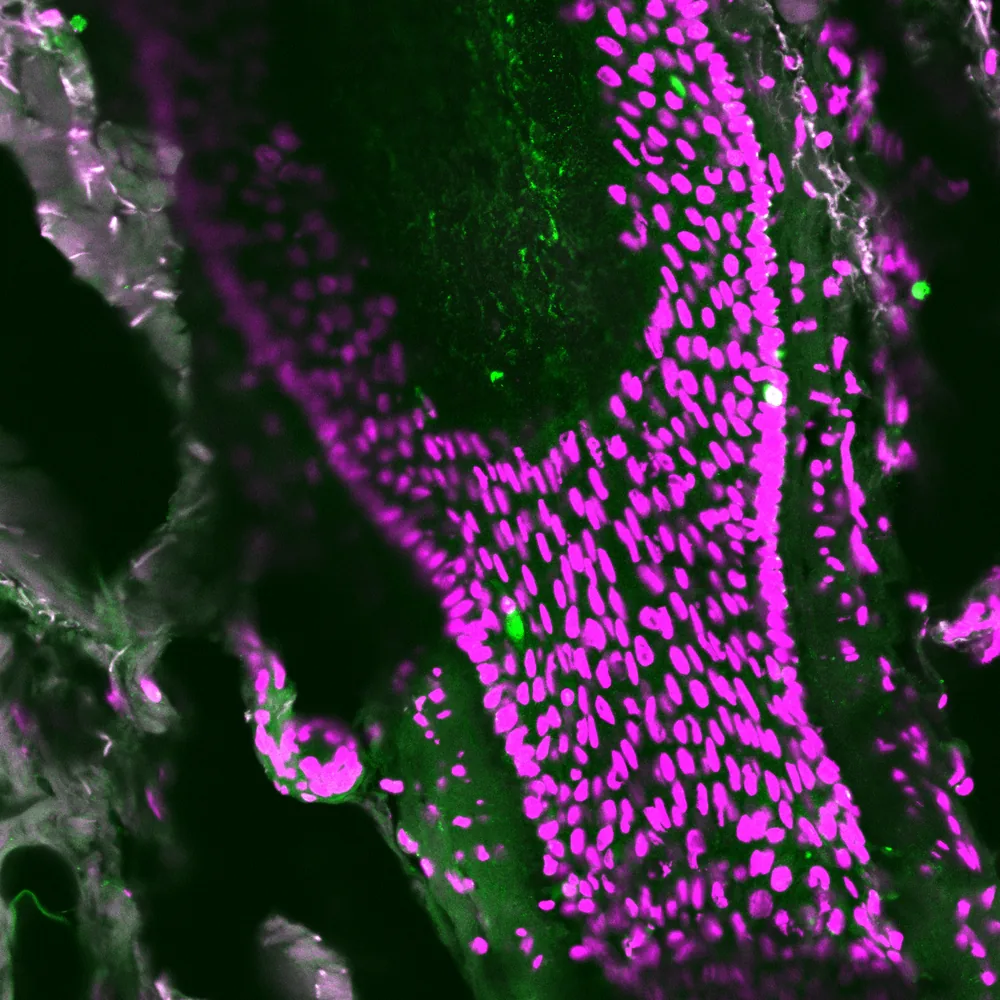
Your first gray hair appeared a few weeks ago, and now it has company. The visible strand is the last step of a biological process that started months earlier. Most treatments focus on covering up what has already grown in, but new research points to ways to work at the root cause instead.
How hair gets its color, and why it stops
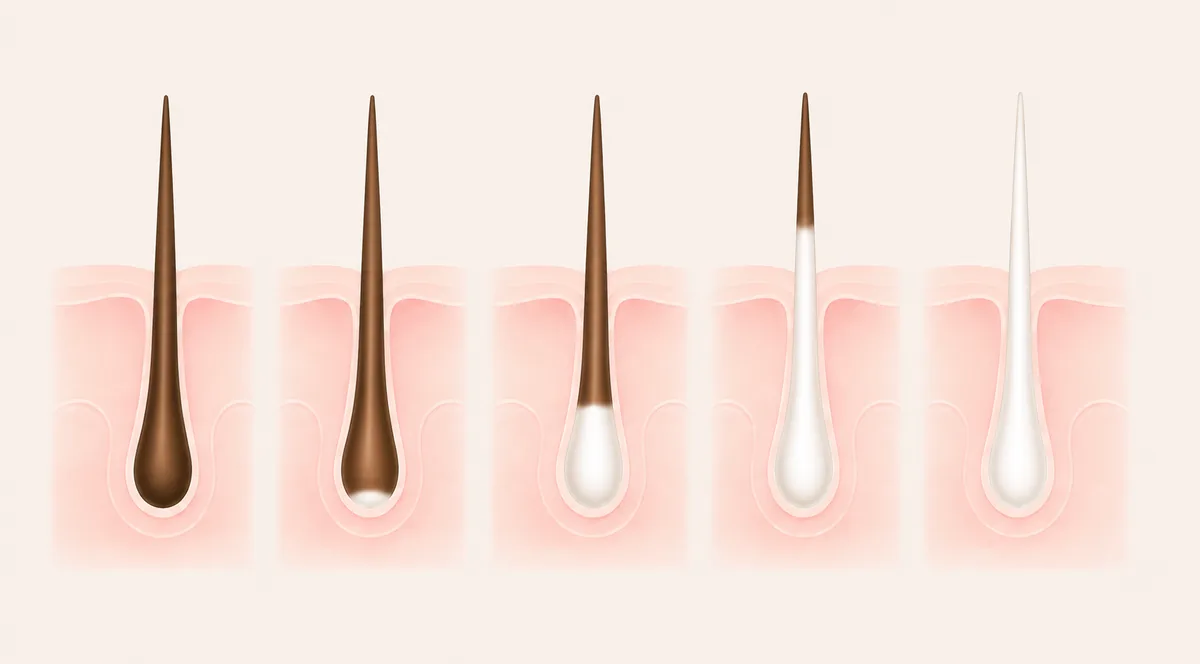
The color of each strand is set by a group of cells inside the follicle called melanocyte stem cells. When they are present and switched on, the next hair grows in with color. When they are gone or switched off, it grows in white. The supply feeding each follicle is limited.
There are two ways color drops out. The first is depletion - each growth cycle, a few of these stem cells die when they should go dormant, or turn into pigment cells in the wrong place and never make it back to the reserve. After enough cycles, the reserve is empty for good.
The second is where new research shows a potential way to restart a stuck biological process. When new hair begins to grow, it is due to a signal called “Wnt” that is also responsible for pigment. That signal must fire on two fronts at once: the cells that build the hair and the melanocyte stem cells that color it. If it misfires, a follicle can keep its stem cells and still grow a white hair. Unlike stem-cell depletion, this signal can correct itself on the next growth cycle.
Stress response
Stress can drain this stem-cell reserve. In one study, scientists mapped the pigment in human hairs in segments like tree growth rings. They found that some white hairs had regained color, and the timing tracked with drops in the person’s reported stress. The authors proposed a mechanism that could explain why some hairs regain pigment after growing in white while others don’t - the amount of stem cells available in reserve.
What you can do
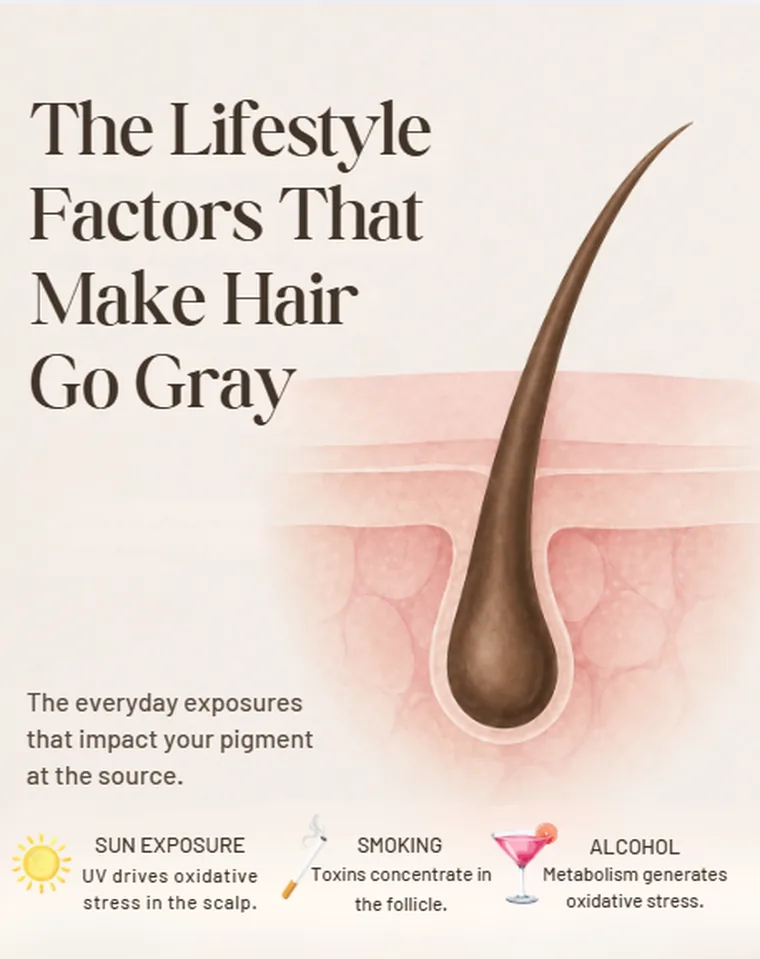
This means that reducing chronic stress and getting consistent sleep may help settle the nerves that deplete that stem-cell reserve. Cutting back on smoking, drinking less alcohol, and reducing inflammation can also help.
Start before you think you need to. The follicle answers to steady inputs over months, so what helps works at the follicle, not on the strand the color is already written into.
References
- Nishimura EK, Granter SR, Fisher DE. Mechanisms of hair graying: incomplete melanocyte stem cell maintenance in the niche. Science. 2005;307(5710):720-724. DOI: 10.1126/science.1099593
- Rabbani P, Takeo M, Chou WC, Myung P, Bosenberg M, Chin L, Taketo MM, Ito M. Coordinated activation of Wnt in epithelial and melanocyte stem cells initiates pigmented hair regeneration. Cell. 2011;145(6):941-955. DOI: 10.1016/j.cell.2011.05.004
- Zhang B, Ma S, Rachmin I, He M, Baral P, Choi S, Gonçalves WA, Shwartz Y, Fast EM, Su Y, Zon LI, Regev A, Buenrostro JD, Cunha TM, Chiu IM, Fisher DE, Hsu Y-C. Hyperactivation of sympathetic nerves drives depletion of melanocyte stem cells. Nature. 2020;577(7792):676-681. DOI: 10.1038/s41586-020-1935-3
- Rosenberg AM, Rausser S, Ren J, Mosharov EV, Sturm G, Ogden RT, Patel P, Kumar Soni R, Lacefield C, Tobin DJ, Paus R, Picard M. Quantitative mapping of human hair greying and reversal in relation to life stress. eLife. 2021;10:e67437. DOI: 10.7554/eLife.67437