
Do Keratin Products Actually Repair Damaged Hair? What the Evidence Says
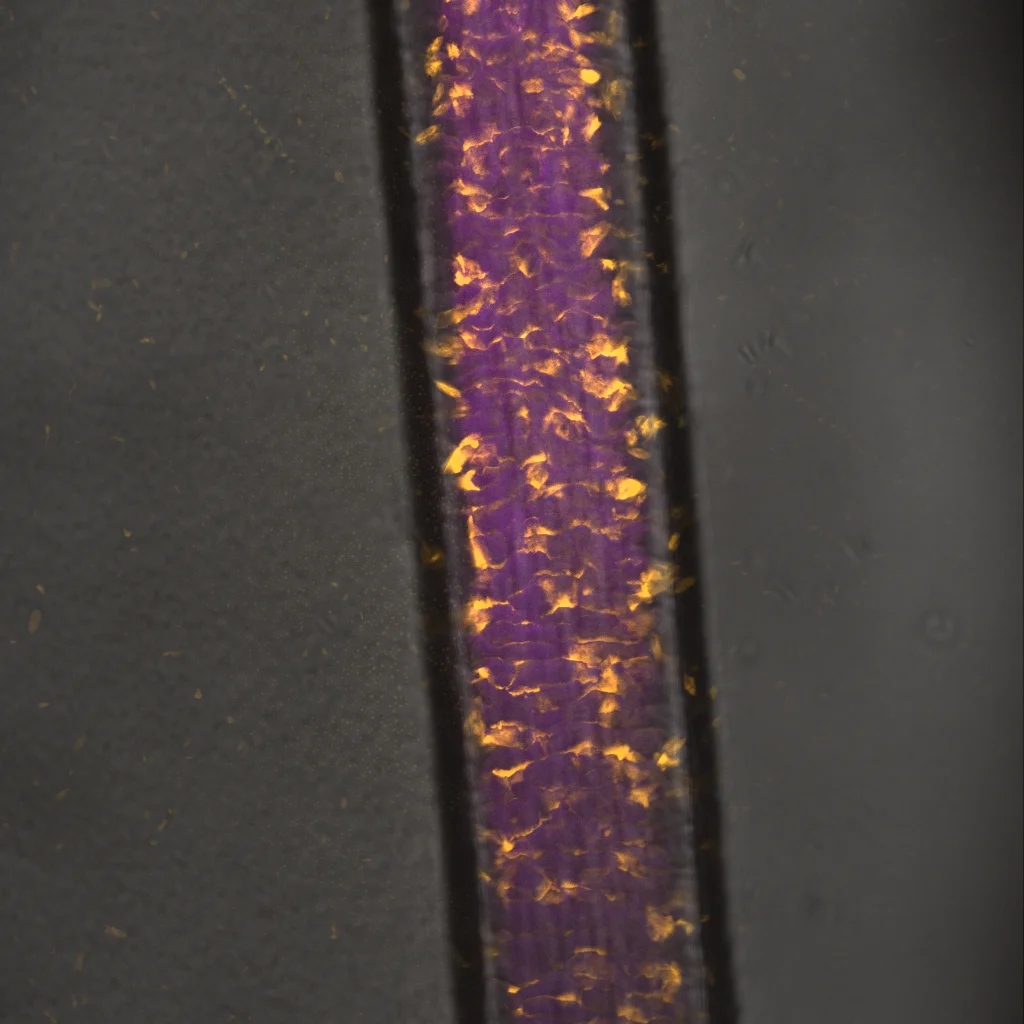
Keratin is not a marketing invention. It is the fibrous protein your hair shaft is built from, which is exactly why a product claiming to "restore" it sounds so believable. But plausible is not the same as proven, and the evidence looks very different depending on whether that keratin comes in a shampoo, a mask, or a pill.
Damage to hair, whether from heat, color treatments, UV exposure, or ordinary brushing, affects the same basic structure: the proteins and protective cuticle layers that give the hair shaft its strength. The logic behind "keratin products" is straightforward. Put protein-derived material back onto damaged hair and, ideally, help reinforce what has been weakened. Whether a product can actually deliver keratin where it needs to go depends heavily on the format. That is the part the marketing usually skips.
Masks and leave-in treatments: the format with a real mechanism
Hydrolyzed keratin is keratin protein broken into smaller peptides so it can be used in a formula. These smaller fragments can deposit on a damaged cuticle and, depending on the formulation, partly penetrate into the cortex underneath.
This is not just theoretical. In one study, hair treated with a hydrolyzed keratin formulation maintained its tensile strength after ultraviolet exposure, while untreated hair lost 14.32% of its strength over the same period.1
The mechanism behind that result matters for everything that follows. Deposition and penetration need contact time with the hair, which is where the next format runs into a problem.
Shampoos: the same ingredient, a much shorter window
Shampoo is a rinse-off product. It is usually in contact with your hair for well under two minutes before it goes down the drain, compared with the several minutes or even overnight contact time of a mask or leave-in treatment.
That difference matters. If keratin works by depositing on the cuticle and partly penetrating the cortex, a rinse-off formula gives it far less time to do either.
A dedicated, well-controlled trial testing a keratin shampoo specifically for hair strengthening does not appear to exist. The stronger evidence for topical keratin comes from treatments with much longer contact time.
That does not mean a keratin shampoo is doing nothing. Good conditioning agents in the same bottle can smooth the cuticle, reduce friction, and make hair feel softer on their own. But the case for the keratin itself doing very much in ninety seconds is fairly thin.
Supplements: weak hair evidence with an industry-funded asterisk
The most relevant trial testing an oral keratin ingredient ran for 90 days in healthy women. It was funded in full by the company that manufactures the ingredient, and several of the authors were affiliated with that company or its contract research partner.2
Its primary, objectively measured outcomes were about skin, including roughness, wrinkle depth, and elasticity. The hair result was an improvement in self-reported hair gloss. That was a secondary, subjective measure rather than an objective test of hair strength, breakage, or growth.2
There is also a basic biological reason to expect a limited effect at best. Like other proteins you eat, hydrolyzed keratin is broken down during digestion into amino acids and small peptides. It does not travel intact from your gut to your hair shaft.
That does not mean an oral protein source can have no effect on hair. It means the specific claim that swallowing keratin directly "replaces" keratin in your hair is much less straightforward than the marketing can make it sound.
What you can do
If your hair is genuinely damaged from heat, color treatments, or mechanical stress, a leave-in treatment or mask with hydrolyzed keratin is the format with the clearest mechanism and measured evidence behind it. Leave it on for the time the product recommends rather than rinsing it out immediately. Longer contact gives the protein more opportunity to deposit on and interact with damaged hair.
Do not expect much from a keratin-labeled shampoo alone. The conditioning ingredients in the same formula may be doing more for how your hair feels than the keratin itself.
If you are considering an oral keratin supplement, it is worth knowing exactly what the evidence shows. The most relevant trial found an improvement in self-reported hair gloss and was funded by the ingredient manufacturer. It did not demonstrate an objective improvement in hair strength or breakage.
The useful distinction is not whether keratin is "real." It is. The question is whether the product format gives it a realistic chance to do anything useful.
References
- Fan J, Wu L, Wang J, Bian X, Chen C, Chang K. Performance and Mechanism of Hydrolyzed Keratin for Hair Photoaging Prevention. Molecules. 2025;30(5):1182. DOI: 10.3390/molecules30051182
- Tursi F, Nobile V, Cestone E, De Ponti I, Lepoudere A, Sergheraert R, Soulard J-P. The Effects of an Oral Supplementation of a Natural Keratin Hydrolysate on Skin Aging: A Randomized, Double-Blind, Placebo-Controlled Clinical Study in Healthy Women. Journal of Cosmetic Dermatology. 2025;24(1). DOI: 10.1111/jocd.16626