
Going Gray Early? The Biologic Explanation
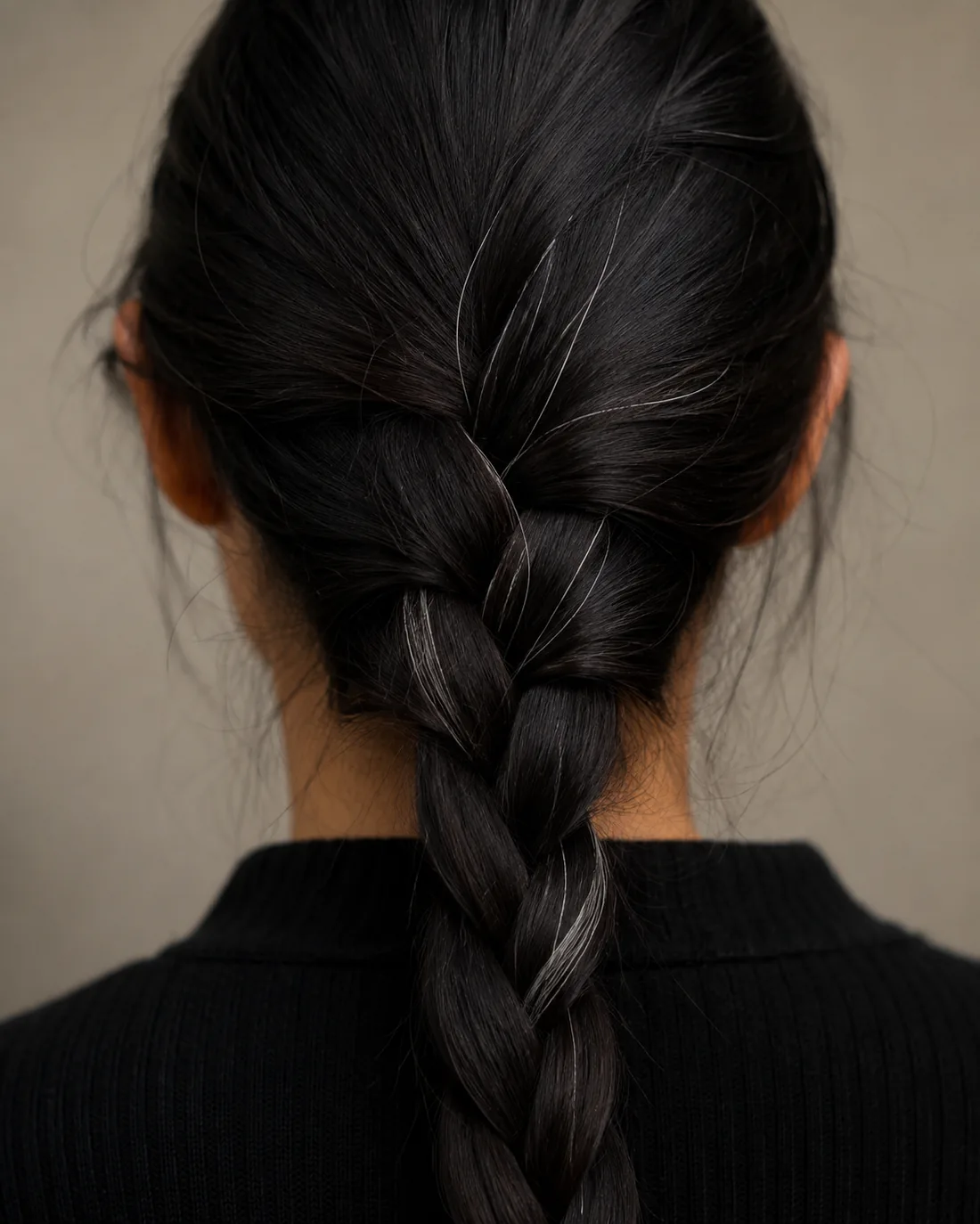
You may have spotted your first gray earlier than you expected, and you may not be alone. There is an ongoing debate about whether younger generations are going gray earlier than previous ones. It is hard to prove, because studies can examine only snapshots, not comparisons over time. What can be shown is that graying responds to biological, social, and environmental conditions - and several of these have shifted in recent decades.
What has actually changed
Stress. Past generations had hard weeks, but the quiet stretches between them tended to be longer. A modern world that keeps us connected to work, news, and notifications around the clock can induce a chronic low-grade stress response - and that signal reaches the cells that maintain color.
Sleep. Americans report sleeping less than a decade ago: the share getting eight hours or more has fallen and short sleep has risen. Sleep is when much of the follicle’s overnight repair happens, so less of it leaves more oxidative damage uncleared.
Environment. Other factors have changed that affect the chemistry follicles need to generate pigment - eating habits with more processed food, more ambient inflammation, and urban air pollution. None is dramatic alone, but together they are a steady push on the systems that keep us healthy.
The whole story, in one follicle
Inside a graying follicle there are too many reactive byproducts and too few of the enzymes that clear them, so it sits in oxidative stress. That wears on the melanocyte stem cells that resupply pigment each cycle. As the reserve drains, fewer pigment cells get rebuilt, and the next hair grows in with less color. One small human study traced this directly: when reported stress rose, color fell; when it eased, some hairs regained it.
The point
We may never prove that younger generations are going gray earlier. What is clear is that graying responds to the conditions around the follicle - and many of those have changed over the years.
References
- Seiberg M. Age-induced hair greying: the multiple effects of oxidative stress. International Journal of Cosmetic Science. 2013;35(6):532-538. DOI: 10.1111/ics.12090
- Rosenberg AM, Rausser S, Ren J, Mosharov EV, Sturm G, Ogden RT, Patel P, Kumar Soni R, Lacefield C, Tobin DJ, Paus R, Picard M. Quantitative mapping of human hair greying and reversal in relation to life stress. eLife. 2021;10:e67437. DOI: 10.7554/eLife.67437